We work as a team from the start of each assignment, delving into the initial concepts and ideas, which to us are the soul of the project, including the structure and interior design. For each project, we prepare at least 3 different design proposals, all addressing the wish list from the clients, the plot, and all the regulations. For us, it is a conceptual challenge that drives us to improve and pushes us to always go a little further to step out of our comfort zone. For our clients, knowing that their choices will become a part of the design process, establishing a foundation of trust.
Regarding the projects scale, we work from masterplans, groups of buildings or residences, down to small-scale projects, attending to the smallest detail. In development projects, we take charge of brand branding, corporate design, graphic design, web, promotional images and/or videos, plans, and construction, trying to cover everything with the same perspective to thus generate a comprehensive project. Every project is as important as the others and we value each one as if it were the first, the last, and the only one.
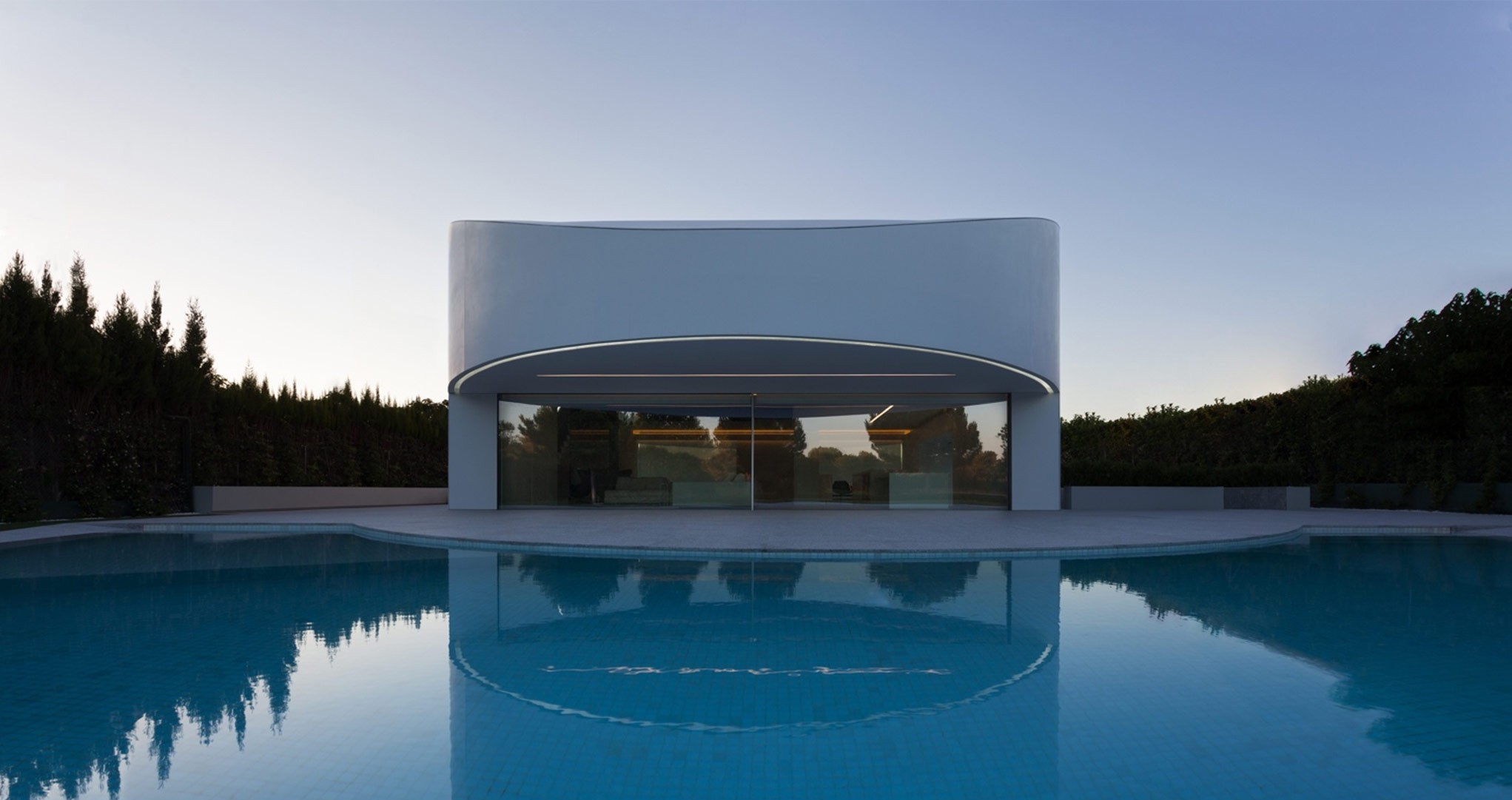
betera,valencia
Fran Silvestre is a Doctor of Architecture, graduated with honors from the UPV, and received the same distinction in his urban planning degree from TU/e in the Netherlands. He holds a Magna Cum Laude doctorate in design from UPV. Currently, he is a professor in the Department of Projects at UPV and the European University, and leads the MArch Postgraduate School in Architecture and Design. In 2011, he was the vice-director of the Higher Technical School of Architecture of Valencia, and in 2018, he obtained the Victor L. Regnier Chair at KSU in the United States. Throughout his career, he trained with the Portuguese Pritzker Prize winner Álvaro Siza. His studio, Fran Silvestre Arquitectos, was founded in 2005. Based in Valencia, it operates in the former workshop of sculptor Andreu Alfaro, a 7000 m2 space where a multidisciplinary team of over 50 professionals works on residential, cultural, corporate, and public projects worldwide.
He has received awards such as the 2001 Caja de Arquitectos Foundation Prize, the 2010 COACV Architects’ Association Prize. In 2012, he was chosen by the Ministry of Culture and Sport as the ambassador of Spanish Architecture in the United States with the Spain Arts and Culture program. He won the Red Dot Design Award in 2013, the same year he received the Best Architect of the Valencian Community award at IVAM Modern Art Institute. In 2015, he won the Build Architectural Award in the United Kingdom. The Superior Council of Architects of Spain awarded him the first prize of the XIII Biennial of 2016 in the design category. That same year, he won the NYCxDESIGN award in New York. He has been awarded four times by the German Ministry of Economy and Technology in 2016, 2020, 2021, and 2024 with the German Design Award. In 2018, he was selected for the FAD awards, and in 2021, he won the IF Design Award. In 2022, the International Federation of Architects and Designers awarded him the First Prize with the gold medal in the Architecture category. In 2024 he won the Bronze Delta Award at the ADI Awards.
Additionally, he has been invited to present his work at numerous seminars and conferences at international universities and institutions, such as KSU, AIA New York, or Virginia Tech. He has also exhibited in various museums, like the Museu Serralves in Porto within the inovdesign framework, or MoMA through the On-Site exhibition. His work has been published in magazines like Architectural Record, GA houses, On-diseño, or Interni. It has also been featured in publishers like Phaidon, Taschen, Thames & Hudson, or GG. Various monographs have been published about the studio’s work, such as those by TC cuadernos, A.Mag, or Arianuova. Recently, the New York publisher Rizzoli, with the prestigious critic Philip Jodidio, released a monograph about the studio’s work.
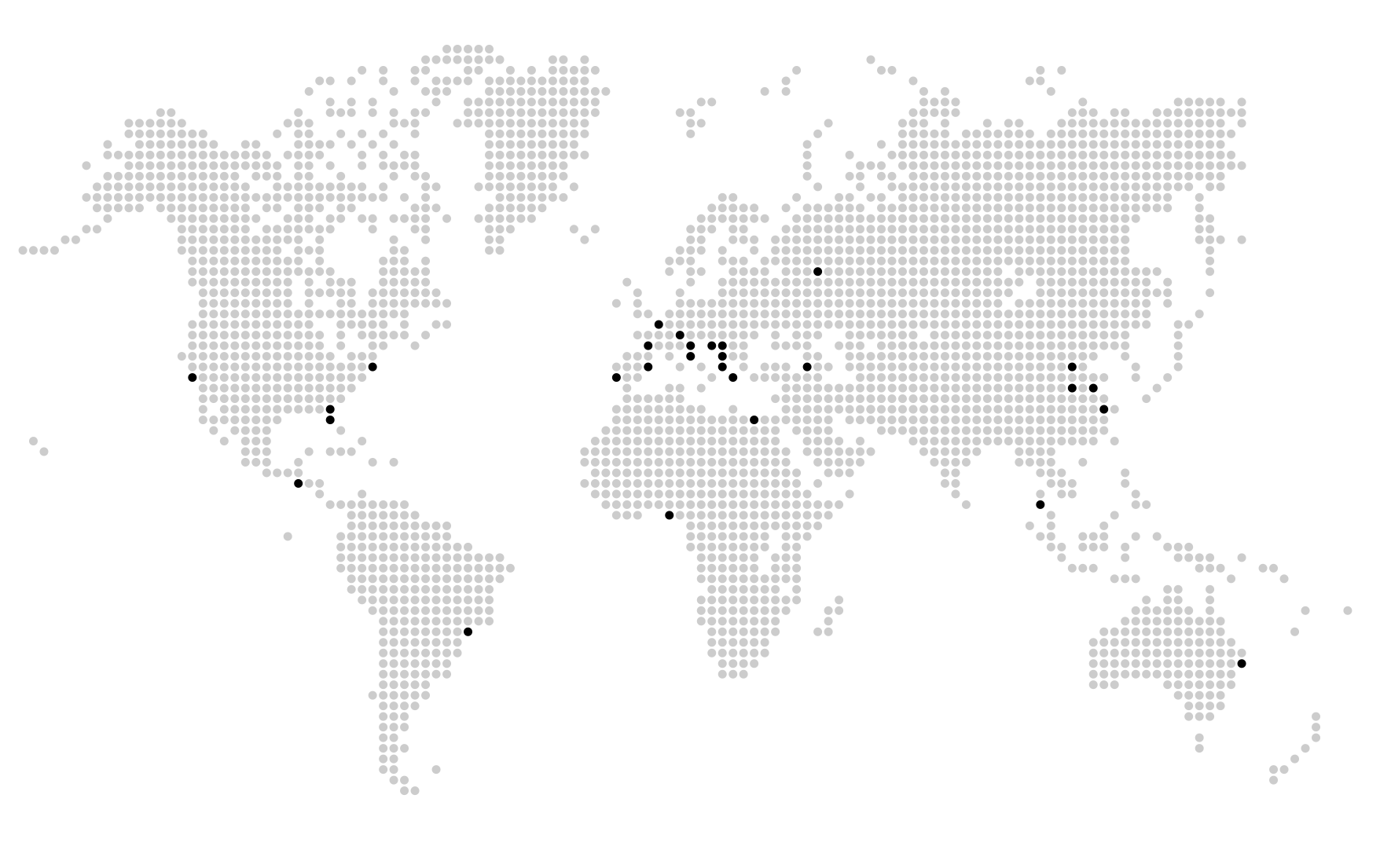
The studio’s projects are scattered worldwide, in places such as China, the United States, Brazil, Thailand, Egypt, Croatia, Italy, Australia, and Spain. Throughout its trajectory, the studio has worked on projects of various scales. Noteworthy projects include the Cliff House (Alicante, Spain), the Balint House (Valencia, Spain), the House in Hollywood Hills (Los Angeles, USA), the Zibo master plan (Zibo, China), the Boutique Hotel (Vis, Croatia), and the Eolic Tower (Valencia, Spain).
The studio’s architecture is heavily influenced by the works of Álvaro Siza and Andreu Alfaro. As critic David Cohn says, “Fran Silvestre is not an essentialist seeking a lost and rooted authenticity, nor is he tuned to the divine harmonies of perfect geometric form under the light. His art, despite its abstraction, deals more with the matter at hand, and how to create an environment for everyday life that elevates us out of the ordinary, into a more complete and awakened sensual engagement with our surroundings.”
The focus of the project arises from a dual commitment: the will to give a technical answer to a specific context (program needs, budgets, policy, environment…) and the desire to seek beauty trough the built work. This process seeks satisfaction, understood in its fullest sense, of all those actively involved in its development: customers and users in particular, but also collaborators, builders and designers.
During our career can be found very different types of building. There are new-builds, rehabilitations, alterations, housing blocks, public buildings… Works made with high budgets and small budgets, but in all cases great attention has been paid to the economy, without waste. The architecture may be a grand gesture or a great detail, if each brief is seen as an opportunity to realize a good project.
Another feature of the process is continuity. Continuity with an environment that must be respected, spatial continuity, the use of few materials, integration of facilities, of lighting… Are all common aspects in the exhibits. Also, continuity in time is also searched, evaluating the architecture that is able to endure without becoming obsolete.
It emphasizes the use of innovation trough new materials, new technologies which improve people’s lives. Innovation based both on experience and the improvement on tradition.
Accuracy is a key concept in the working method. It requires a focused and attentive activity throughout the whole process, ranging from the initial idea, trough the drafting of the project until its realization: the construction, the furniture, its maintenance…
Dialogue is always present, since the work becomes part of the identity of those who inhabit it. The house and, where appropriate, the work space are an accurate reflection of those who live or work there, an unmistakable expression of their personality or their corporate culture. This dialogue seeks comfort and also utility, examines the conflicts and joys of daily acts of human life, which defines architecture against the other arts.
The answer given to these concepts, developed with extremely subjective parameters, characterizes the projects, each of them different from the rest.
And finally, let us consider the team. Excellence is design is based on the integration of a network of professionals that enjoy the pleasure for their work. A team of specialists in the calculation of structures, acoustics, building services, graphic design, interior design, architecture… that produces a shared creative environment capable of generating contagious motivation, taking care of what is in progress and excited about what is to come next.